Racism in health systems
Despite governments and health practitioner bodies across Australia having made multiple commitments to eliminate systemic racism, it is clear that Aboriginal and Torres Strait Islander peoples still encounter racial prejudice in health systems every day.
Priority 8 of the 2021–2031 NATSIHP aims to identify and eliminate racism across the health, disability and aged care systems, including both individual and systemic racism. However, commitments to build a health system free of racism cannot be achieved without an unflinching examination of the sources, extent and impacts of the systemic racism that currently exists.
Accordingly, Lowitja Institute calls for governments to immediately invest in an Aboriginal and Torres Strait Islander-led research agenda that focuses on the impacts of systemic racism in health systems. The Australian Human Rights Commission’s work on an inaugural National Anti-Racism Framework will also be an opportunity to establish ongoing mechanisms, led by Aboriginal and Torres Strait islander peoples, to capture and measure experiences of racism and impacts of systemic racism in health systems
Impact of racism on children
Position paper
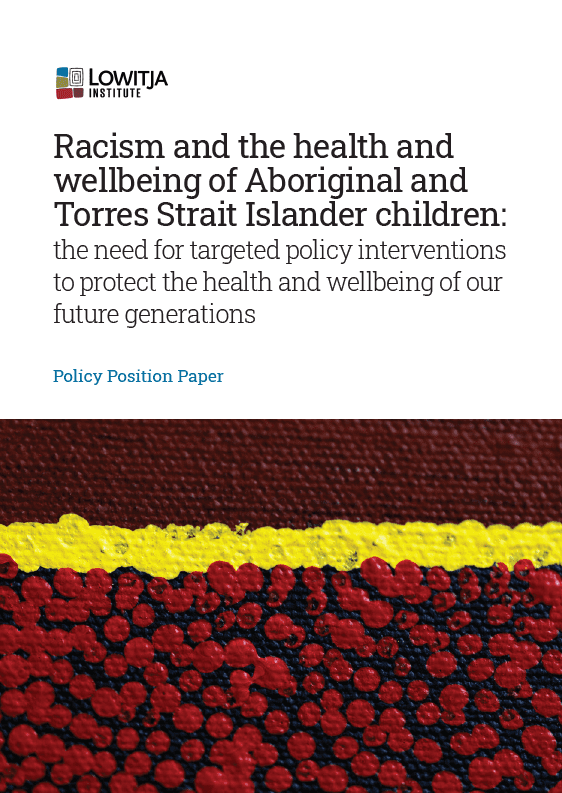
In January 2026, we published the position paper that highlights the ongoing and pervasive nature of racism in Australia and the ways systemic racism continues to be experienced by Aboriginal and Torres Strait Islander peoples, but particularly our children, and calls for urgent action to supporting local, community-led responses and driving systemic reform to protect and promote the wellbeing of our children.
Download document
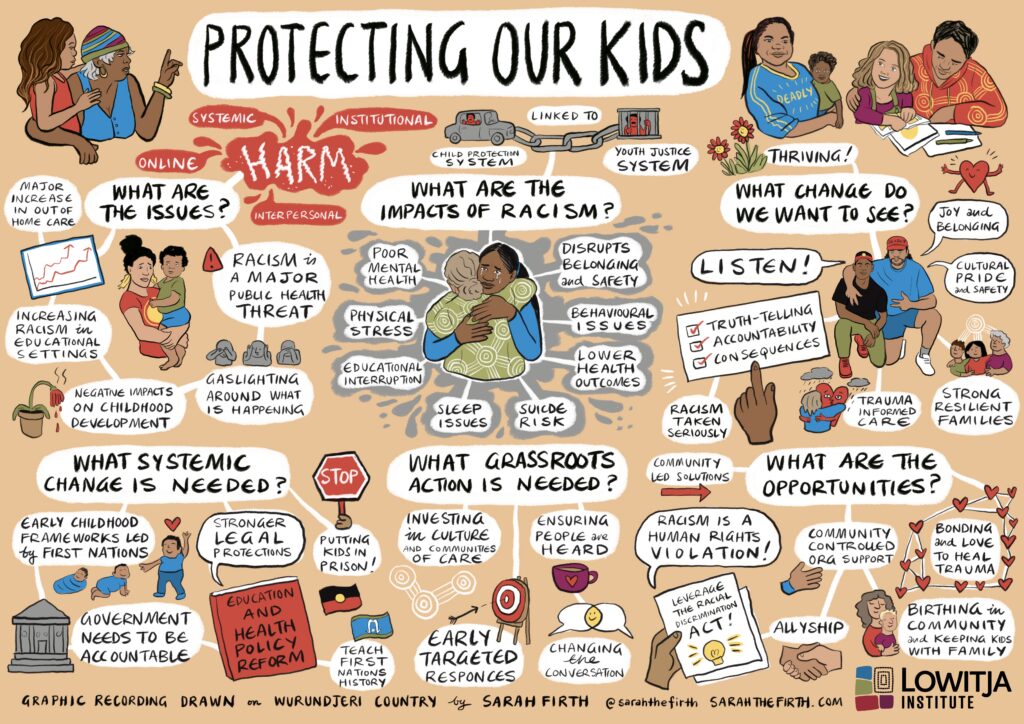
Protecting our kids: Confronting and challenging racism after 26 January
Our 29 January 2026 online event explored the impacts of racism on Aboriginal and Torres Strait Islander children. This webinar focused on how racism impacts on the health and wellbeing of our children and what’s needed to protect their futures, highlighting how Aboriginal-led and community-driven solutions can address racism and strengthen communities.
This event was deliberately scheduled following 26 January: a date that remains deeply painful for many Aboriginal and Torres Strait Islander peoples, marking invasion, dispossession, and continued injustice. It is often accompanied by heightened racist rhetoric, public debate, and harm. In this context, it is critical for us to come together to discuss racism and further understand its impacts on children, ensuring that we will play a role in challenging narratives that perpetuate harm and injustice.
The webinar provided a space for Aboriginal and Torres Strait Islander peoples and non-Indigenous allies to come together in solidarity, in reflection after 26 January, and to consider meaningful actions that challenge racism and support change.
During the webinar, we heard from Aboriginal and Torres Strait Islander leaders, researchers, and community advocates who shared their knowledge and lived experience, and held space for honest conversations about racism, its impacts on children, and the collective action needed to create safer, more just futures.
‘Racism erodes confidence, it disrupts relationships, and it narrows a child’s sense of what is possible. What is often described as behavioural difficulty is frequently the psychosocial impact of living in a system that doubts, disciplines and devalues you.’
Natalie Lewis, Queensland Aboriginal and Torres Strait Islander Children’s Commissioner